
Planning a Dubai day after an overnight flight is easier when you treat arrival as part of the trip. Your plane may land early, while your room is not ready until later. You may also feel wide awake at breakfast and tired soon after. A gentle first day gives you room for these changes without losing the chance to enjoy the city.
This guide helps you choose what to do between the airport, your hotel and your first evening. It is a planning guide, not a promise of early hotel access, attraction availability or fixed transfer times. Confirm those details with the provider handling each part of your journey.
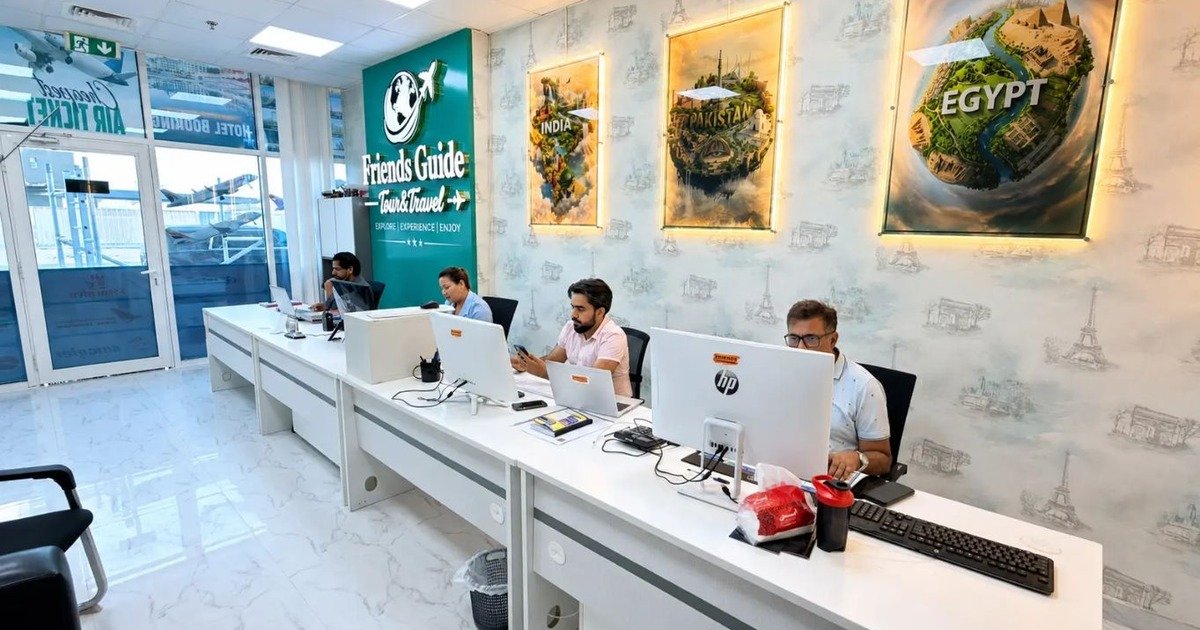
Friends Group connects several specialist businesses. For help with visitor arrangements, start with Friends Guide Travels & Tourism. The travel company can discuss your request; a request becomes a confirmed service only when the arrangements are agreed. You can also use the companies directory to check which business should receive your enquiry.
Begin with the real arrival window
Landing is the start of arrival
Write down the scheduled landing time, but do not build your day around leaving the airport at that exact minute. You still need to leave the aircraft, complete the required arrival steps and collect any checked bags. The time needed varies. A flight reaching the gate on time does not mean your group will reach a driver on time.
Give your transfer provider the flight number and arrival date. Check the date carefully when your journey crosses midnight. Tell them whether the group has checked luggage, young children or anyone who needs assistance. These details help the provider understand the request without relying on a rough estimate from a map.
Ask where you should go after collecting your bags and how to contact the driver. Save the meeting instructions before departure. A clear meeting point is more useful than a message saying that someone will be waiting outside. Keep the provider's confirmed contact details available even if your usual mobile connection is not working immediately.
Solve the room question before choosing attractions
Ask what is actually guaranteed
An early flight does not automatically give you an early hotel room. Ask the hotel about its check-in time and whether early access can be confirmed for your booking. A note saying that you requested early check-in is different from a written commitment that a room will be available.
If resting on arrival is essential, ask what booking arrangement would guarantee access. The hotel may offer a paid option, another room type or a different solution. Compare the complete terms before changing your reservation. Do not assume that arriving a few hours earlier will simply be accepted at the desk.
Check luggage storage separately. A hotel may be able to hold bags even when the room is not ready, but confirm the service and any restrictions. Ask about access to stored luggage if you need medicine, baby supplies or a change of clothes. Keep important items with you rather than packing them at the bottom of a large case.
Give everyone a simple first-day choice
Plan for different energy levels
One traveller may want to explore as soon as the bags are down. Another may need a shower and quiet time. Talk about this before the flight, when nobody is standing tired in a lobby. Agree that the first day can change if the journey is harder than expected.
Choose one easy shared activity and one optional activity. For example, everyone might have breakfast near the hotel, while those who feel comfortable take a short walk afterwards. The others can remain in a suitable waiting area or rest when their room becomes available. Confirm what the hotel allows before relying on its facilities.
Avoid making one person responsible for keeping the whole group awake. The aim is a pleasant arrival, not winning an endurance test. Families can nominate a meeting time later in the day so that separate choices do not turn into missed messages and confusion. Share the exact meeting place and allow people to opt out of the optional stop.
Keep the first outing close to your base
Reduce the cost of changing your mind
A nearby meal or short outing is easier to adjust than a trip across several districts. Look at the location of your hotel and choose something you can leave without losing a major booking. A familiar meeting point also makes it easier for a tired group to return.
Do not judge a route only by the distance between two pins. Finding the entrance, waiting for transport and walking within a large building all take time. On arrival day, a simple route can be more useful than the attraction with the longest list of features. Check access and opening arrangements for the actual date.
If you want a wider introduction to Dubai, ask the travel team about a suitable itinerary for your arrival circumstances. Say that your group has just completed an overnight flight. Ask which stops involve walking, which are short photo stops and whether you can finish near your hotel. Treat flexibility as a detail to confirm, not an automatic inclusion.
Separate a transfer from a sightseeing service
Know when the booked service ends
An airport transfer normally has a defined journey and finish point. It should not be treated as a vehicle waiting for an unplanned day of sightseeing. If you want an extra stop, ask in advance and get the arrangement recorded. The provider needs to know the time, route and luggage requirements.
For a sightseeing service, confirm the start point, duration, stops and final drop-off. Check whether bags can remain in the vehicle and whether that is suitable for your belongings. Never leave passports, essential medicine or valuables behind simply because it is convenient. Keep responsibility for your important items clear.
Ask how changes caused by a late arrival would be handled. A missed attraction slot, a changed pickup and a shortened tour are different issues. The answer may depend on which provider holds each booking. A single written summary can help you see what is confirmed and what still needs a decision before you travel.
Choose meals with the whole group in mind
An easy meal can anchor the day
After a long journey, deciding where to eat can take more energy than expected. Pick a straightforward first meal near your hotel or confirmed stop. Check opening hours, seating and any needs that matter to your group. Leave room for a slower pace if someone is not hungry immediately.
Share dietary requests with the restaurant or provider directly. A restaurant being nearby does not mean it can meet every request without notice. Ask clear questions about the food or preparation issue that matters to you. Avoid using a vague label when a more specific explanation would help the venue respond accurately.
Carry a practical plan for children while waiting, such as familiar snacks where permitted and an activity that does not need a network connection. Keep the meal flexible enough that a delay does not upset the rest of the itinerary. One calm meal can help the group settle into the city better than several tightly timed stops.
Make luggage a visible part of the plan
Count pieces as well as people
A group of four with small cabin bags has different transport needs from four people with large cases and a stroller. Send the actual luggage count before the vehicle is confirmed. Include bulky items and anything that needs special handling. Ask the provider to confirm suitability rather than guessing from the number of seats.
Prepare a small arrival bag with the items you may need before room access. This might include a fresh top, chargers and supplies for children. Keep it light enough to manage during a short outing. Do not turn it into another large case that makes every stop harder.
Agree who checks each bag when leaving the airport, vehicle and hotel storage area. A simple count at each handover reduces the chance of leaving something behind. If two households are travelling together, mark bags clearly so that the wrong case is not sent to another room or pickup point.
Leave paid timed experiences for a stronger window
Protect the bookings that matter most
Your most important attraction does not have to happen immediately after landing. A later day may give you a better chance of enjoying it without worrying about airport delays or room access. Consider which tickets have fixed entry times and which plans can be moved more easily.
If arrival day is your only available day, choose the booking time with care. Ask about admission rules, late arrival and cancellation terms before paying. Include travel to the correct entrance and time to find your way. Do not treat a scheduled flight arrival as a guarantee that a specific attraction slot will be reachable.
Write down a backup that does not require buying another major ticket. This could be a meal, a short walk or time near your hotel, depending on the circumstances. A backup is useful when it is simple and affordable. It is less useful when it adds another chain of reservations that all depend on the same uncertain arrival.
Build a first-day budget that includes waiting
Small practical costs belong in the total
List the confirmed transfer, any room-access arrangement, meals and the activity you choose. Ask whether storage, extra stops or extended vehicle time would cost more. This helps you compare complete options rather than choosing the lowest headline price and discovering the missing parts later.
Keep a small part of the day's budget free for a change in circumstances. You might decide that a quieter meal or a simpler journey is worth paying for. This does not mean spending without a limit. Agree what can be changed by the group organiser and what needs another person's approval.
Request written prices for the services you are actually considering. Record the date, number of travellers and main conditions beside the amount. A quote for another day or group is not a reliable guide to your final cost. Avoid treating an old screenshot or social post as confirmation of current availability or terms.
Use a short message to brief the travel team
Send decisions, not a long wish list
Start with the date, flight number, landing time and hotel location. Add the number of adults and children, luggage details and any access needs. Then explain the main outcome: a gentle arrival with a meal and one easy stop, or a direct journey to a room that you have already arranged.
Tell the team which part is fixed. Perhaps the hotel is booked, but sightseeing is open. Perhaps an evening event is confirmed and everything before it must stay light. This lets the person preparing the response understand the boundaries. A clear request is easier to answer than a list of attractions copied from several different itineraries.
Use the official contact page if you need help reaching the right Friends company. Check the reply against your request before confirming. If a detail has changed, ask for the revised version in writing. The official group overview explains the wider portfolio, while the travel company profile identifies the specialist business for visitor arrangements.
Three sample arrival plans
A family with an early landing
The family confirms a transfer and asks the hotel about early room access before departure. They keep spare clothes and children's supplies in one small bag. Their only shared plan before the afternoon is breakfast near the hotel. If the room is delayed, they use the hotel's confirmed storage arrangement and choose a short nearby outing that everyone can leave easily.
Two friends with different priorities
One friend wants photographs, while the other expects to be tired. They agree on breakfast and a later meeting time. The optional outing stays close to the hotel. Neither person books a non-refundable activity for the other. This gives them a shared first day without making them follow the same pace at every moment.
A visitor with an evening commitment
The visitor has a confirmed evening event and wants to avoid arriving there exhausted. They arrange the airport journey, room access and event transport separately. The afternoon stays open for preparation. If the flight is late, sightseeing is the first thing removed, rather than the event transfer or time needed to get ready.
Check the plan from the least flexible point
Work backwards from a confirmed commitment
If you have a fixed dinner, meeting or ticket, write that time first. Then add the journey to its actual entrance, the time needed to prepare and a sensible gap for an ordinary delay. The space left over is your real sightseeing window. This is more reliable than starting with a long attraction list and hoping it fits before the evening.
For example, a visitor with an evening celebration may need to return to the hotel, collect clothes from luggage and get ready before leaving again. Those steps are part of the day even though they do not appear on a sightseeing map. Planning them honestly can turn an apparently free afternoon into a short, useful outing and a comfortable return.
Keep the arrival plan on one page. Put each confirmed service on a separate line with its provider, meeting point and contact method. Label anything unconfirmed as a question. This simple distinction prevents a suggested stop from slowly becoming a promise in the group's memory. Share the page after a change, rather than asking everyone to piece together several old messages.
Prepare for the moments between bookings
Waiting should have a practical answer
Trips often become difficult in the gaps: waiting for a room, waiting for another family member or waiting for transport after a meal. Decide where the group can sit comfortably and who will keep track of messages. Ask the venue before relying on a lobby, restaurant or storage service as your waiting place. Being a guest later in the day does not automatically give access to every facility early in the morning.
Think about charging phones before they run low. Carry the charging equipment you need and keep booking information available offline. If only one person has all the documents, a flat battery can slow the whole group. A second adult can keep copies of ordinary meeting instructions and booking references, while sensitive documents should be shared only where necessary.
Choose a clear signal for changing the plan. The family might agree that if room access is delayed beyond their comfortable waiting window, they will shorten the optional outing. A couple might decide to eat before discussing another activity. These small agreements remove pressure from the tired person who would otherwise have to argue for a break in front of everyone.
Finish arrival day without making tomorrow harder
Leave a small space for the next morning
Before the evening becomes busy, check tomorrow's first booking. Confirm the pickup point, clothing needs and anything that must be taken from luggage. You do not need to plan the entire holiday again. A short check can prevent an early morning search for tickets or a message that nobody noticed during the flight.
Put the next day's essentials together in a place everyone can find. If your group uses separate rooms, agree how and where you will meet. Do not assume that a hotel has only one entrance or one breakfast area. Use the exact location supplied by the provider when a tour pickup is involved.
Finally, judge the day by how well it served your group. A smooth arrival, an enjoyable meal and one pleasant view can be a successful start. You have not failed because a long sightseeing list became shorter. The purpose of arrival planning is to make the rest of your visit easier, so that your booked experiences can receive your attention when you are ready for them.
A useful check before departure
Read your arrival plan aloud as if you had just landed and had no energy to solve another puzzle. Can you find the meeting point, the hotel answer and the first meal option quickly? Does everyone understand which activity is optional? If the page still needs a long explanation, simplify it before leaving home. Keep provider contact details beside the relevant service and make sure another adult can find ordinary meeting instructions. This final check does not remove every delay, but it makes the decisions you can control easier when you arrive.
Frequently asked questions
1. Can I start a Dubai tour straight after an overnight flight?
You can ask for a tour that fits your arrival, but consider how your group usually handles long journeys. Confirm the meeting point, luggage arrangements and what happens if the flight is late. A short introduction may be easier than a long route. Nobody should feel obliged to continue if the plan becomes uncomfortable.
2. Does an early landing mean my hotel room will be ready?
No. The room follows your booking terms and the hotel's confirmed arrangements. Ask whether early access is guaranteed or only requested. If resting immediately matters, discuss a booking option that gives you certainty. Keep the hotel's written confirmation with your travel records so there is no confusion at reception.
3. Should I book attraction tickets for the morning I arrive?
Think carefully before choosing a fixed morning slot. Airport arrival steps, luggage and transport can take longer than expected. Check ticket terms and allow a comfortable gap. If the attraction is the main reason for your visit, a later day may protect that experience from an uncertain arrival window.
4. What should I tell the airport transfer provider?
Provide the flight number, arrival date, passenger count, luggage count and confirmed destination. Mention children, bulky items and access needs. Ask for the meeting instructions and a contact method. If your plans change, tell the provider through the agreed channel rather than assuming the driver will discover the change independently.
5. Can the transfer driver keep my luggage while I explore?
Only rely on this if the provider has confirmed it as part of the service. A transfer may end at drop-off, and extra waiting or stops may require another arrangement. Ask what is allowed and keep important documents and valuables with you. Hotel storage is also something to confirm, not assume.
6. Is it better to explore near the hotel on arrival day?
For many groups, a nearby outing makes changing plans easier. It reduces the number of journeys and gives you a clear return point. The best choice still depends on your hotel, arrival time and interests. Check the actual route and access rather than choosing a place only because it looks close on a map.
7. How can a family avoid a stressful first morning?
Agree on one easy shared activity, keep essential supplies accessible and avoid several fixed bookings. Explain the plan to children in simple steps. Give adults permission to shorten the outing if needed. A calm breakfast and clear hotel arrangements can be more useful than trying to visit every landmark before lunch.
8. Should everyone in the group follow the same first-day plan?
Not always. Different people may need different amounts of quiet time after the journey. Agree on safe, practical options and a clear meeting point. Make sure children and anyone needing assistance remain with the right person. Separate choices work best when the organiser knows who is going where and when they will reconnect.
9. What if my flight delay changes the whole day?
Contact the providers affected by the change and refer to their confirmed terms. Protect essential arrangements first, such as the airport journey and room access. Remove optional sightseeing before creating another rushed plan. Ask for any changes in writing so that the driver, hotel and group organiser are working from the same information.
10. How can Friends Guide Travels help with arrival planning?
Share your flight, hotel, group details and preferred pace with the travel team. Ask which arrangements they can provide for your date and which details need separate confirmation. Compare the written inclusions and terms before booking. The aim is a plan that fits your actual journey, with enough room to enjoy your first day.
Explore related official pages
Continue with verified information from the Friends Group of Companies website.